 KETA PILATES
Buying guide
What to Check Before Buying a Pilates Reformer in Bulk
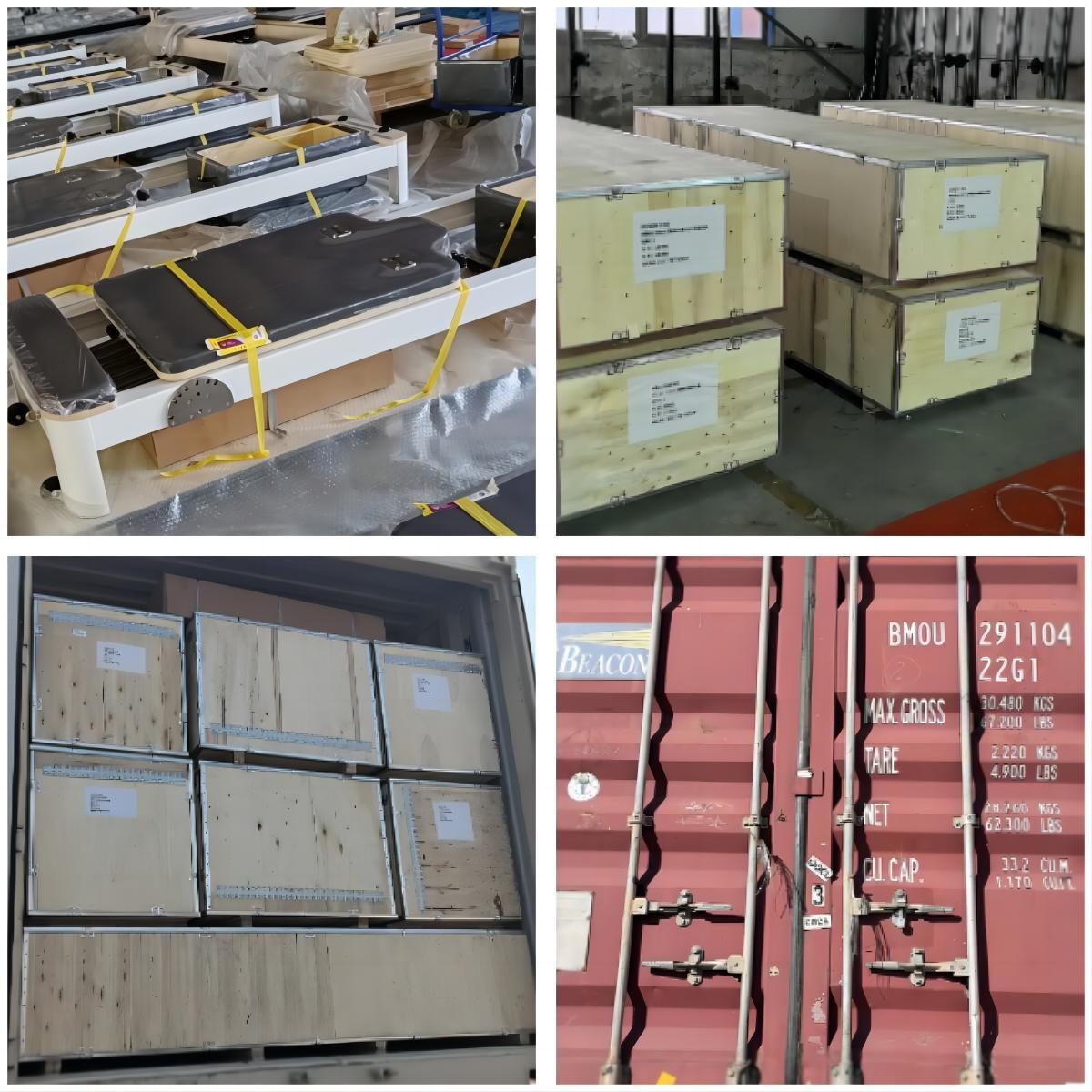
Buying one reformer for a home studio is a personal choice. Buying ten or twenty for a commercial studio, a hotel group or a resale business is a completely different decision — a mistake here costs you the whole container, not one machine.
This guide covers the seven things worth checking before you place a bulk order. It is written from the problems we see most often in real shipments, not from a marketing checklist.
1. Frame material: match it to your market
Four materials cover almost every commercial need, and each suits a different situation.
- Aluminium alloy — the lightest option, rust-proof, and consistent in colour from batch to batch. It suits humid climates, hotels, and studios that move equipment between rooms. Our aluminium reformers run 2,110–2,560 mm in length.
- Oak — heavier, warmer in appearance, the traditional studio look. Higher shipping weight per unit. Oak models: 2,280–2,410 mm.
- Maple — the standard for classical studios. Very stable, takes a hard finish well, and holds its colour. Maple models: 2,310–2,380 mm.
- Beech — dense and rigid, chosen where frame stiffness matters more than appearance.
A simple rule: if your clients are in Southeast Asia or coastal regions, aluminium removes most corrosion complaints. If they sell classical Pilates, wood is part of the product they are buying.
2. Commercial rating — not "looks commercial"
Three things separate a machine built for commercial use from one that only looks like it:
- Maximum user weight — commercial units are typically engineered for 120–150 kg in motion, not just static load.
- Carriage and bearing construction — good bearings and rails are what keep a reformer smooth after 100,000 cycles.
- Frame construction — wall thickness on metal frames, joint method on wood. Mortise-and-tenon joints outlast screwed assemblies by years.
Here is the arithmetic that matters: a reformer used six hours a day, six days a week, goes through roughly 150,000 carriage cycles a year. A home-grade machine is simply not built for that, and it will show within the first year.
3. Dimensions and floor plan
Measure the room before you order, and leave working space:
- 600 mm clearance in front of and behind each reformer, so instructors can move around it.
- 900–1,000 mm between two reformers placed side by side.
- 2,000 mm minimum ceiling height for tower reformers and Cadillac reformers; 2,400 mm is comfortable.
For reference, a standard reformer occupies roughly 2,340–2,560 mm in length and 600–900 mm in width depending on the model. Tower and Cadillac versions are taller, not longer — the floor footprint stays similar.
4. Springs: resistance, material, replacement
Springs are the first part to wear out, and the easiest one to plan for.
- Material — piano wire (also called music wire) is the industry standard; stainless steel is the alternative for humid or coastal markets.
- Resistance levels — five to six springs per machine is the commercial standard.
- Replacement cycle — roughly 12–18 months under daily studio use.
- Spare springs — always order them with the machines.
Practical tip: buy 10–20% spare springs with your first container. Your clients will ask for them within a year, and shipping a small parcel of springs separately costs more than the springs themselves.
5. Upholstery
Two choices matter here:
- PU (polyurethane) — easy to clean, consistent colour, the commercial default.
- Genuine leather — better feel, needs regular care, higher cost.
Foam density matters as much as the cover material — it is measured in kg/m³, and anything below 30 kg/m³ flattens within a year under daily commercial use. Reupholstering costs more than specifying it correctly in the first place.
Colour should be confirmed before production starts. Most factories can match a swatch or a RAL reference.
6. Certification and import documents
For most markets you will need:
- CE declaration (Europe)
- ISO 9001 for the factory
- SGS test reports on load and materials
- Additional documents for chain, hotel or public-sector buyers, prepared on request
Collect these before you pay the balance, not after the container arrives. This single step prevents most clearance headaches.
7. Packing, shipping and after-sales
- Packing — export wooden crate with corner protection, foam and stretch film inside. A standard reformer ships at roughly 110 kg gross weight.
- Container planning — ask for a loading plan before production. As a working reference: a 20ft container takes about 30 reformers, and a 40ft high cube about 75. Mixed models change the number, so always confirm against your final list.
- Spare parts — every order includes a set of spare screws and small fittings at no charge. Springs, ropes, wheels and straps are available separately, and it is worth adding them to the first container.
- Assembly — selected models are supplied with an English printed manual, and installation videos are available for every model. Send us the model code and we will send you the video before your team starts.
- Warranty — three years on the frame and one year on other parts is a fair commercial standard.
Quick checklist before you sign
- ☐Frame material matched to climate and market
- ☐Load rating and frame construction suitable for commercial use
- ☐Dimensions measured against the actual room
- ☐Spare springs ordered with the machines
- ☐Upholstery material and colour confirmed
- ☐CE / ISO documents and test reports in hand
- ☐Container loading plan received
- ☐Warranty and spare parts availability in place
We build reformers, tower reformers and Cadillac reformers in aluminium, oak, maple and beech, along with foldable models, ladder barrels, chairs and studio equipment. MOQ is 5 pieces and different models can be mixed in one container. Samples ship in 5–7 days, containers in about 20–25 days.
Send us your quantity, destination and any customisation you need — we will work out the most economical packing and shipping plan, and we will tell you honestly if a different model suits your market better.
Choosing reformers for a studio or a first container?
Send us your room dimensions, expected weekly usage and destination port. We will tell you which frame and specification actually suits you — and if a cheaper option is the right one, we will say so.
Request a quote