 KETA PILATES
Buying guide
What Actually Drives the Price of a Pilates Reformer
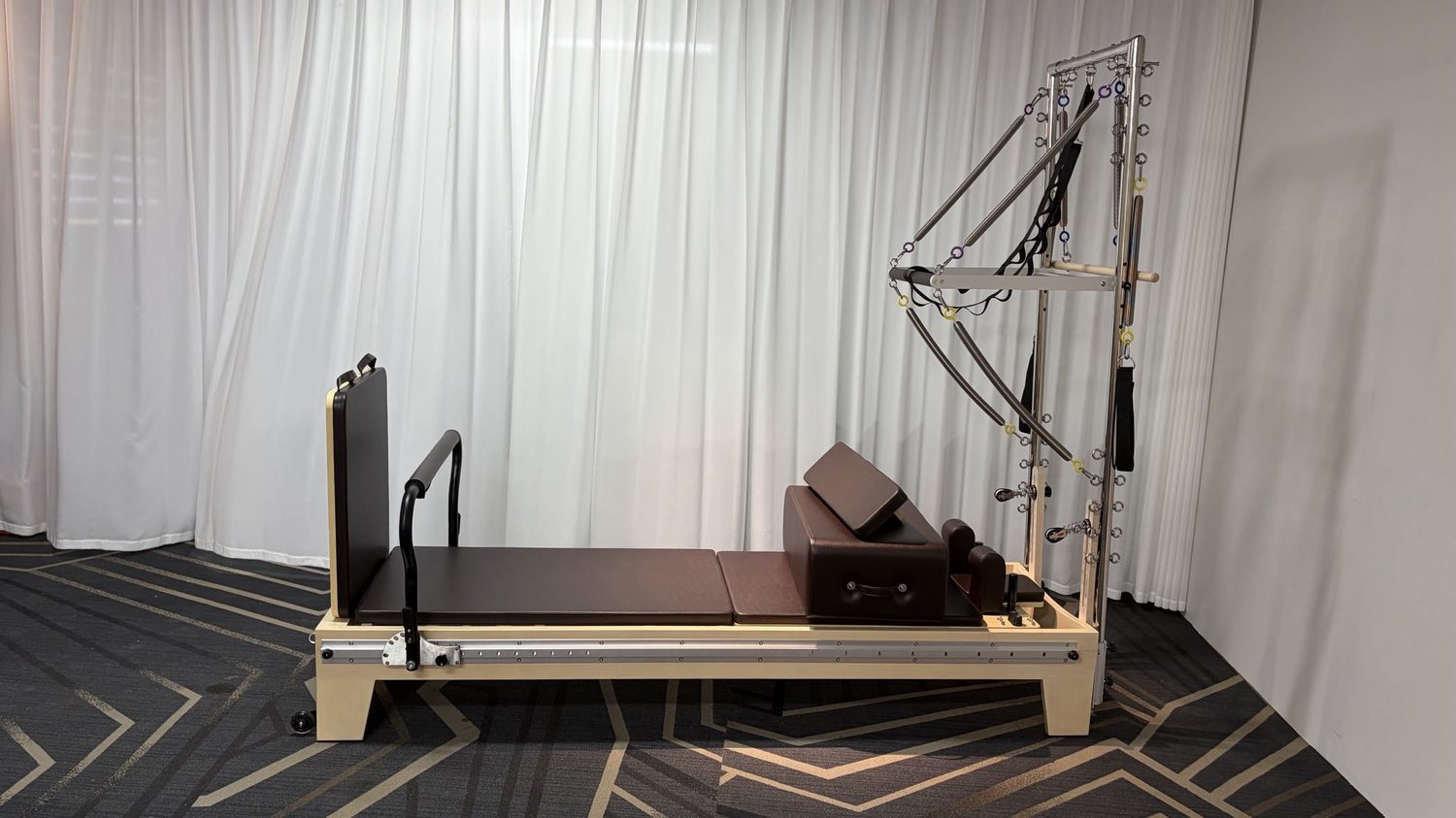
Two reformers can look almost identical in photos and differ by 40% in price. If you are buying for a studio, a hotel or resale, it is worth knowing exactly what you are paying for — and which upgrades are worth the money.
This is a breakdown of the cost drivers, in the order that they actually move the number.
1. Frame material
Material is the single biggest driver, and it is not simply a question of which one is "best".
- Aluminium alloy — consistent, rust-proof, lighter to ship. Priced in the mid-to-upper range, but saves money on freight and eliminates corrosion complaints in humid markets.
- Maple — the classical studio standard. Stable, holds a hard finish, priced mid-range.
- Oak — heavier, traditional appearance, similar band to maple but higher shipping weight.
- Beech — dense and rigid, usually a modest premium.
Our aluminium reformers run 2,110–2,560 mm in length, oak models 2,280–2,410 mm, and maple models 2,310–2,380 mm. Larger frames use more material and cost more — size is part of the price, not just the material.
2. Commercial load rating
This is where cheap machines quietly cut corners. A genuinely commercial reformer is engineered for continuous use:
- Rated for 120–150 kg in motion, not static load
- Bearings and wheels specified against a cycle test, not just "smooth running"
- Wooden frames joined with mortise and tenon rather than screwed butt joints
- Metal frames with adequate wall thickness
A reformer used six hours a day, six days a week does roughly 150,000 carriage cycles a year. Engineering for that costs money, and it is the difference between a machine that lasts three years and one that lasts ten.
3. Springs and hardware
Spring quality varies more than buyers expect:
- Piano wire springs (also called music wire) are the industry standard — crisp feel, predictable resistance
- Stainless steel springs are the alternative for humid or coastal markets, where rust resistance matters most
- Consistent resistance across the set matters for class safety
- Commercial springs typically last 12–18 months under daily use
Cheap sets often use inconsistent wire, which means two machines in the same class feel different — instructors notice immediately.
4. Upholstery and foam
- PU (polyurethane) — the commercial default, easy to clean, consistent colour
- Genuine leather — a real premium, better feel, requires care
- Foam density — specified in kg/m³. Below 30 kg/m³ will flatten within a year of daily commercial use
This is one of the most common hidden shortcuts: a machine that looks identical but uses low-density foam will look tired within twelve months.
5. Certification and testing
For European and many institutional buyers, documentation is not optional:
- CE declaration
- ISO 9001 factory certification
- SGS test reports on load and materials
- Additional documentation for chains, hotels and public buyers, prepared on request
Testing costs money, and factories that skip it can quote lower. Collect the documents before you pay the balance.
6. Customisation
Colour matching, logo application, frame finish, manual language and carton printing all add cost — but usually less than buyers assume, and they matter for resale businesses. Confirm these before production starts, because they cannot be added afterwards.
7. Freight, per machine
The price per machine is not the landed cost. A standard reformer ships at about 110 kg gross weight, and a 20ft container takes roughly 30 machines while a 40ft high cube takes about 75.
On many routes a 40ft costs only marginally more than a 20ft — which means freight per machine drops by more than half when you fill the larger container. Two small orders usually cost more than one large one.
What to send when you ask for a price
A factory can only quote accurately if you tell it:
1. Models and quantities (mixed models are fine — MOQ is 5 pieces) 2. Destination port (we ship from Shanghai, Qingdao or Tianjin) 3. Material preference, if you have one 4. Customisation — colour, logo, manuals 5. Whether you need documentation for your market
Without these, any price you receive is a guess.
We build reformers, tower reformers and Cadillac reformers in aluminium, oak, maple and beech. Samples ship in 5–7 days and containers in about 20–25 days, with a three-year frame warranty and one year on other parts.
Send us your list and destination, and we will quote properly — including an honest answer on whether a different model would serve your market better.
Choosing reformers for a studio or a first container?
Send us your room dimensions, expected weekly usage and destination port. We will tell you which frame and specification actually suits you — and if a cheaper option is the right one, we will say so.
Request a quote