 KETA PILATES
Buying guide
What a Pilates Reformer Warranty Should Actually Cover
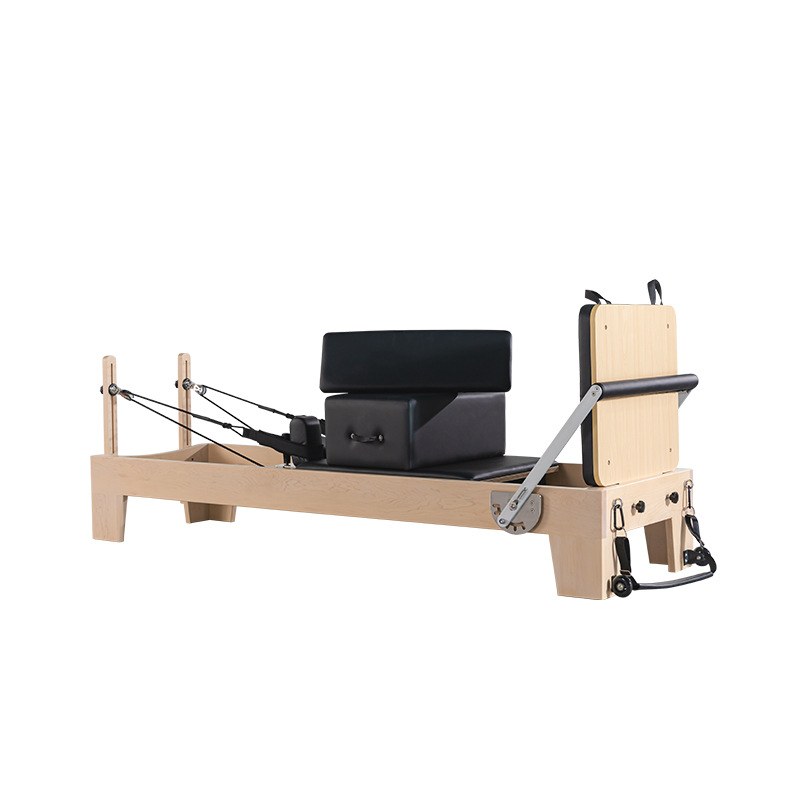
You are about to spend a few thousand dollars on equipment that will travel 7,000 km in a steel box, clear customs, and land in your studio six weeks later. Once that container seals, the only safety net you have left is the warranty clause in your contract. Most buyers never read it carefully — until something breaks and the supplier says "that's a wear part, not covered."
This guide tells you what a real supplier warranty should spell out, the red flags that mean you have no protection at all, and the specific terms you should ask for in writing before you pay.
What "warranty" usually covers — and what it doesn't
A reformer is a mechanical object: a frame under constant tension, springs that stretch and fatigue, rails that take load every session, and upholstery that absorbs sweat and friction. A sensible warranty separates the structural parts (which should last years) from the consumable parts (which wear out no matter how good the build is).
Typical coverage splits like this:
- Frame and structural welds — the longest coverage, often 3–5 years on a commercial unit.
- Springs and resistance — treated as wear parts; covered for a shorter window (often 6–12 months) or sold as replaceable.
- Upholstery and padding — covered against manufacturing defects, not against normal wear.
- Hardware, ropes, straps, wheels, belts — usually the shortest or excluded, because they depend on usage.
If a supplier tells you "everything is covered for life" with no breakdown, that is not a warranty — it is a sentence designed to sound reassuring and mean nothing.
Five things a solid warranty should state in writing
1. Frame coverage and duration. How many years, and against what (cracks, deformation, weld failure). A commercial-grade frame should carry at least 3 years. 2. Spring and resistance policy. Springs fatigue with use; a credible supplier tells you the expected cycle life and how to order replacements, rather than pretending they never wear. 3. Upholstery and foam. Covered against defects in material and workmanship, with a clear statement of what normal wear looks like. 4. Spare parts availability. The real test of after-sales support: can you buy a single spring, rope, wheel, or belt years later? A supplier who stocks spares is a supplier who plans to still be in business. 5. The claim process. Who do you contact, what proof is needed (photos, serial number, inspection report), and how long the response takes. No process = no warranty.
Red flags: you probably have no real protection
- "Lifetime warranty" with no document. If it is not on paper with definitions, it disappears the moment there is a dispute.
- No serial or batch traceability. If the factory cannot tell your unit from any other, it cannot honor a claim.
- Cannot name the claim steps. A serious exporter has a written procedure; a trader who "figures it out case by case" has nothing behind him.
- Warranty dies the second the container leaves. Real support covers the product after arrival, not just before payment.
What responsible suppliers actually do
A manufacturer that stands behind its equipment builds the after-sales story into the product, not just the sales pitch:
- Third-party credentials such as CE, ISO 9001, and SGS give you an independent baseline for material and process quality.
- Pre-shipment quality control (AQL sampling) and factory audits (for example CTI) catch structural problems before the unit ships, which is cheaper than a warranty claim later.
- A free hardware kit (screws and small fittings) included with every order means you are not stuck waiting on a single missing bolt.
- Installation videos for every model let your team assemble correctly — incorrect assembly is the #1 cause of "warranty" disputes that are actually misuse.
- Spare parts on hand — springs, ropes, wheels, and belts available to order separately — keep a studio running instead of shutting down a reformer.
For reference, our standard terms are MOQ 5 pieces per model with mixed models allowed, lead time about 20–25 days for a full container or 7–15 days for a small order, samples 5–7 days, and each unit ships with the hardware kit and an installation video.
How to protect yourself before you pay
- Get the warranty in writing, with the five points above filled in — not a one-line promise in a chat.
- Ask for the claim procedure as a condition of the order, before depositing.
- Keep the installation video and follow it; misuse is the most common reason claims are denied.
- Buy a spare-parts kit (springs, ropes, wheels, belts) with the first order so you are never waiting on a single component.
- Record the unit's batch or serial at unpacking; it is your proof if you ever need to claim.
A warranty is only as good as the supplier standing behind it. The right partner makes the terms specific, keeps spare parts in stock, and proves quality before the container leaves — so you rarely need the warranty at all.
Talk to us about terms you can put in writing
If you are comparing suppliers, ask each one for their warranty document and claim procedure side by side. We are happy to send ours in writing, along with model specs, spare-parts pricing, and an installation video for the units you are considering.
Request a quote and the written warranty terms — tell us the models and quantity, and we will reply with specifics you can keep on file.
Choosing reformers for a studio or a first container?
Send us your room dimensions, expected weekly usage and destination port. We will tell you which frame and specification actually suits you — and if a cheaper option is the right one, we will say so.
Request a quote