 KETA PILATES
Buying guide
Reformer Springs: Types, Resistance and When to Replace Them
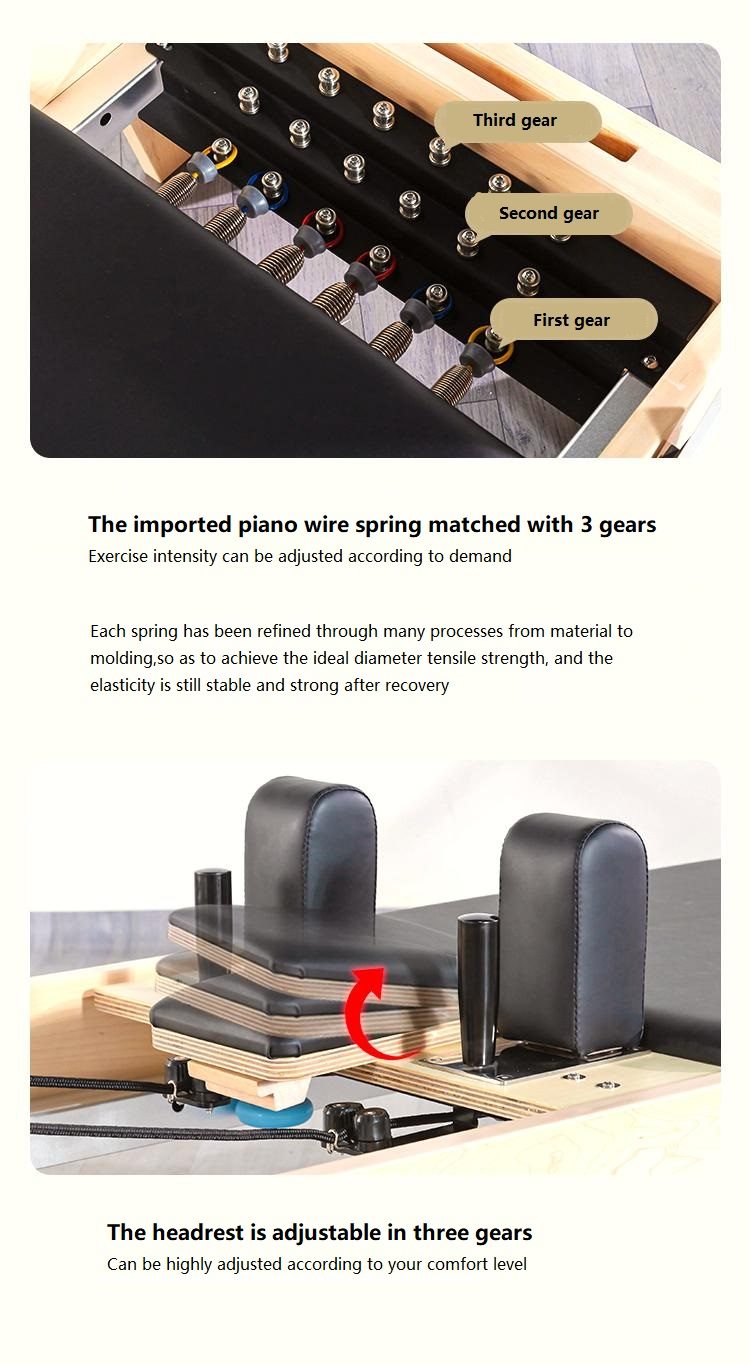
Springs are the first thing to wear out on a reformer and the first thing an instructor complains about. They are also the cheapest part to plan for — provided you order them at the right time.
This covers what springs actually do, which material suits which market, how long they last, and when to replace them.
What the springs are doing
A reformer has no motor and no weight stack. The springs are the resistance. Five or six springs per machine, each with a different strength, are what let an instructor tune a class from gentle rehabilitation work to full athletic loading.
That means spring quality is not a detail — it is the machine. Two reformers with inconsistent springs are different machines, even if they look identical.
Material: piano wire or stainless steel
- Piano wire springs (also called music wire) are the industry standard. They give a crisp, predictable feel and hold their tension well.
- Stainless steel springs are the alternative for humid or coastal markets, where rust resistance matters more than the last degree of feel.
For most studios either will do. For Southeast Asia, coastal Australia, the Gulf, or any space with a pool nearby, stainless is the safer specification — corrosion is the most common spring complaint we hear from those markets.
Resistance levels and consistency
Commercial reformers typically run five to six springs per machine. What matters more than the count:
- Consistency across machines. If two reformers in the same class have springs that differ by 10–15%, participants doing the same exercise get different work. Instructors feel it immediately.
- Colour coding. Standard colour coding (usually light to heavy) lets instructors set a class quickly without guessing.
- Matching to your teaching method. Some classical programmes expect a specific resistance feel. Tell your supplier which method your instructors teach before you order.
How long springs last
Under daily commercial use, springs typically need replacing every 12–18 months. Heavier-use studios (six or more classes a day) are at the short end of that range; lighter-use rooms run longer.
This is a wear item, not a defect. It is worth planning for rather than reacting to.
When to replace a spring
Do not wait for one to break. Replace springs when you see:
- Visible deformation — a spring that no longer sits straight or has uneven coil spacing
- Loss of return — a spring that stays stretched after loading
- Coating damage or rust spots, especially in humid rooms
- Noticeable feel change — instructors reporting one machine is "heavier" than its neighbour
A spring that fails in class is a safety incident and a cancelled session. Replacing on a schedule costs far less.
How many spares to order
A practical rule: order 10–20% spare springs with your first container.
The economics are simple. Springs are small, they fill gaps in the container that you are paying for anyway, and shipping a small parcel of springs separately later usually costs more than the springs themselves.
Also worth adding to the same shipment: ropes, straps and wheels. These wear too, and they are cheap when they ride along with the machines.
Matching springs to how you teach
Not every class wants the same set.
- Group reformer classes — a full range matters, because participants of different abilities share the same room. Five to six springs per machine lets an instructor tune each participant quickly.
- Private and semi-private — precision matters more than range. Consistent, predictable springs are worth more than an extra resistance level.
- Rehabilitation and clinical work — lighter resistance options get used more, and smooth progression matters. Check the lightest spring in the set, not the heaviest.
- Athletic or conditioning programmes — heavier springs and faster wear. Plan for the short end of the replacement cycle.
If you run several formats in one room, standardise on one specification across all machines and use accessories to vary the work. Mixing spring specifications inside one room is the fastest way to make a class feel inconsistent.
What to confirm with your supplier
- Spring material (piano wire or stainless steel) and wire specification
- Resistance levels per machine and the colour coding used
- Whether spare springs can be ordered separately after delivery
- Whether spare parts are stocked for at least five years
A simple maintenance habit
- Wipe springs down as part of the studio's daily clean — sweat and humidity are what shorten their life
- Check visually once a month for deformation or rust
- Rotate sets across machines if usage is uneven (some machines always get the front row)
- Keep a dated log of replacement so you can predict the next cycle
We build reformers, tower reformers and Cadillac reformers in aluminium, oak, maple and beech. Every order includes a set of spare screws and small fittings at no charge, and springs, ropes, wheels and straps can be added to the same container. Tell us your climate and weekly usage, and we will recommend the spring specification that suits you.
Choosing reformers for a studio or a first container?
Send us your room dimensions, expected weekly usage and destination port. We will tell you which frame and specification actually suits you — and if a cheaper option is the right one, we will say so.
Request a quote