 KETA PILATES
Buying guide
Pilates Equipment for Rehab and Physio Clinics
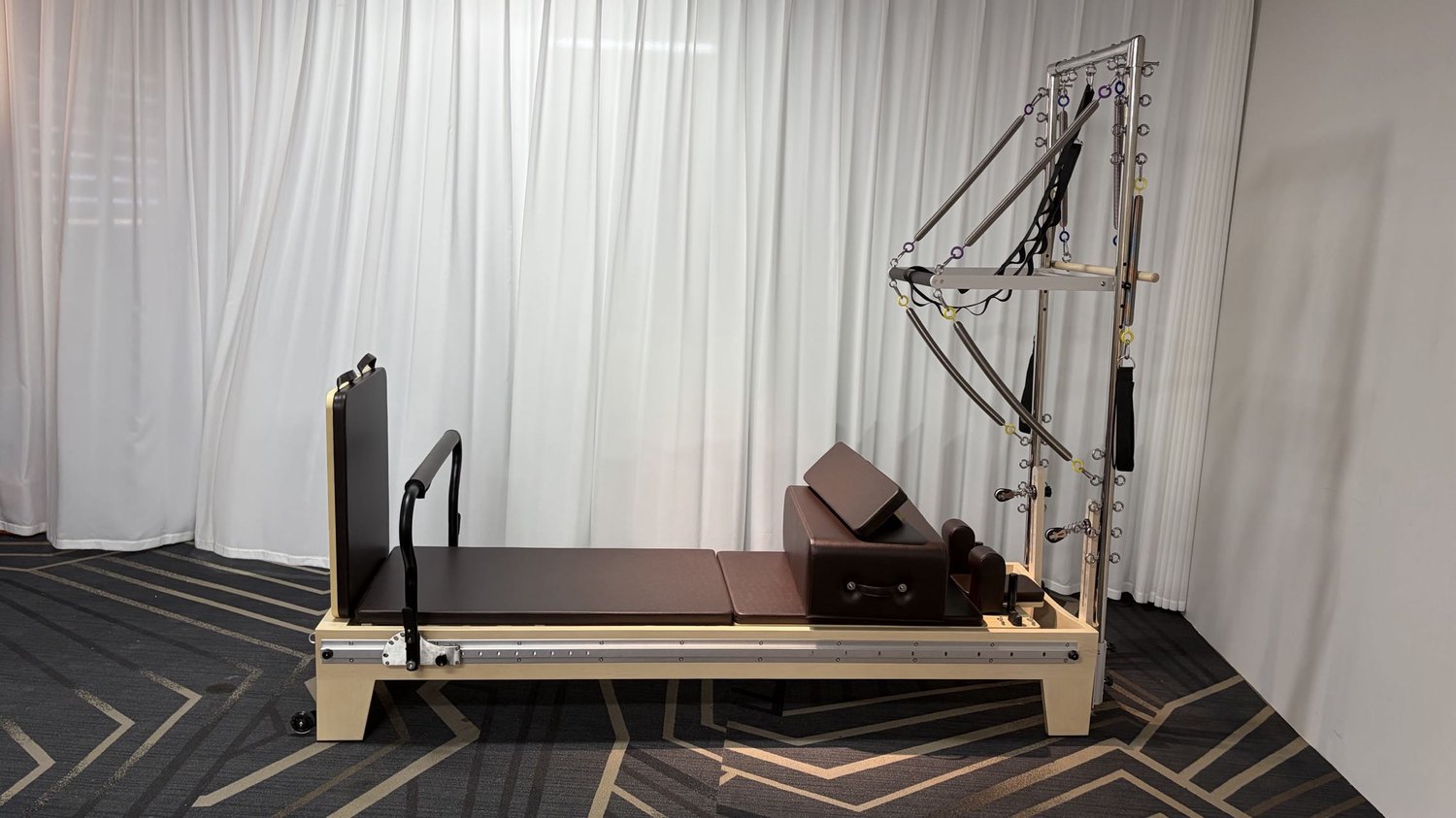
Physiotherapy clinics buy reformers for a different reason than studios do. A studio is buying for classes. A clinic is buying for one-to-one work with people who are recovering from something — and that changes what matters in the specification.
This is a practical guide to what a clinic should actually ask for. It is not medical advice; the equipment here is training equipment, used by qualified practitioners as part of a programme they design themselves.
How a clinic order differs from a studio order
Three things change the moment the buyer is a clinic:
- One client at a time, with the therapist alongside. The therapist needs to stand close, support a limb, and adjust resistance mid-exercise. That puts a premium on access to the carriage and to the spring bar from a standing position.
- The client may be deconditioned or in pain. Getting on and off matters. A low, stable platform with a generous standing area is worth more than a compact footprint.
- Between-session cleaning is non-negotiable. Upholstery sees disinfectant several times a day, every day.
Stability is the first specification, not the last
Ask any clinic what annoys them about equipment and the answer is usually wobble. A reformer that shifts a few millimetres under load undermines the confidence of a client who is already nervous about moving.
When you compare machines, ask for three specific things rather than a general assurance of quality:
1. The rated load, in writing, with the test report behind it. 2. How the frame is joined — welded and bolted joints behave very differently after two years of daily use. 3. The footprint and the machine's weight. A heavier frame with a wider stance is not a drawback in a clinic; it is the point.
This is also where the commercial-grade argument is settled. A machine rated for light domestic use will feel fine in a showroom and fail quietly in a clinic that runs eight sessions a day.
Which machines a clinic actually uses
Most clinics are better served by a small, well-chosen set than by a room full of reformers.
| Machine | What it does in a clinic | Worth buying first? |
|---|---|---|
| Reformer | The workhorse. Supine and seated work, controlled resistance, easy to progress | Yes — start here |
| Tower reformer | Adds vertical spring work without the full Cadillac footprint | Yes, once you have two reformers |
| Cadillac reformer | Full frame for suspended and assisted work; needs ceiling height | Only if you have the room |
| Ladder barrel | Spine mobilisation and posture work | Very useful, low cost |
| Chair | Seated and standing work, small footprint | Useful second purchase |
| Spine corrector | Gentle mobilisation, easy to store | Cheap and often used |
A sensible first order for a single-room clinic is two reformers and one ladder barrel. A two-room clinic typically starts with four reformers, one tower reformer, one chair and one barrel.
Upholstery and cleaning: ask before you order
This is the specification most buyers forget, and it is the one that costs them money later.
Clinic upholstery is wiped with disinfectant multiple times a day. Standard vinyl will crack and peel within a year under that regime. Ask your supplier:
- What is the upholstery rated for — is it a medical-grade or commercial-grade vinyl?
- Is it compatible with the disinfectant you actually use? (Tell them the product; a good supplier will say honestly whether it is suitable.)
- Can you buy replacement upholstery panels, or do you have to replace the whole pad?
That last question is the one that matters financially. A clinic that can re-cover a carriage pad for the cost of a panel will spend far less over five years than one that replaces whole assemblies.
Space, access and getting it through the door
Clinics are often in converted buildings with narrower corridors and smaller rooms than purpose-built studios. Measure before you order:
- Door and corridor width at the narrowest point, not the widest
- Ceiling height — a Cadillac reformer needs materially more headroom than a standard reformer
- Turning space at the top of any stairs
Standard reformers are around 2.1–2.6 m long depending on the model and material. That fits most treatment rooms, but it does not fit all of them — and a machine that cannot get through the door is a very expensive mistake.
If space is genuinely tight, a folding model is a legitimate option for a clinic that uses the room for other work. It is not the right choice for a room dedicated to reformer sessions all day.
Documents clinics ask for
Clinics are used to procurement, so they ask for paperwork that a studio buyer might not. Be ready with:
- CE marking and the declaration behind it
- ISO 9001 for the manufacturing process
- SGS or equivalent test reports on the specific models being supplied
- Material specifications for frame, springs and upholstery
- Rated load and fatigue testing for the models in the order
A supplier who can produce these without a week of chasing is a supplier who will also handle a claim properly. That is worth more than a small difference in price.
Ordering: quantity, mix and timing
A few practical points that catch clinics out:
- MOQ is 5 pieces and models can be mixed. A clinic order of two reformers plus a barrel, chair and spine corrector is a normal single order — you do not need to buy five of anything.
- Production is 20–25 days for a full container order, faster for a smaller trial order. Plan around your room being ready, not around the machine arriving.
- Freight changes the arithmetic. A 20ft container takes roughly 30 machines and a 40ft high cube roughly 75. If your clinic order is six pieces, you are paying for air or part-container freight — ask both options before deciding.
- Spare springs belong in the first order. Each machine ships with five to six springs; in daily clinical use they are the first consumable. Ordering 10–20% spare springs with the machines costs almost nothing extra in freight and saves a month of downtime later.
What to confirm before you sign off
1. The rated load, with the test report 2. Upholstery grade and disinfectant compatibility 3. Whether replacement panels and springs are available separately 4. Ceiling height and door width, measured, against the model you are buying 5. Assembly support — installation videos are available for every model, and selected models include an English printed manual. Ask for the video for your exact model code before the container ships. 6. Warranty terms in writing, including what counts as wear
We build reformers, tower reformers and Cadillac reformers in aluminium, oak, maple and beech, plus ladder barrels, chairs, spine correctors and studio equipment. Tell us what your clinic treats, how many practitioners will use the room and what your dimensions are, and we will tell you honestly which machines earn their place — including the ones you do not need yet.
Choosing reformers for a studio or a first container?
Send us your room dimensions, expected weekly usage and destination port. We will tell you which frame and specification actually suits you — and if a cheaper option is the right one, we will say so.
Request a quote