 KETA PILATES
Buying guide
OEM vs ODM Pilates Reformer: How to Private-Label Equipment from China
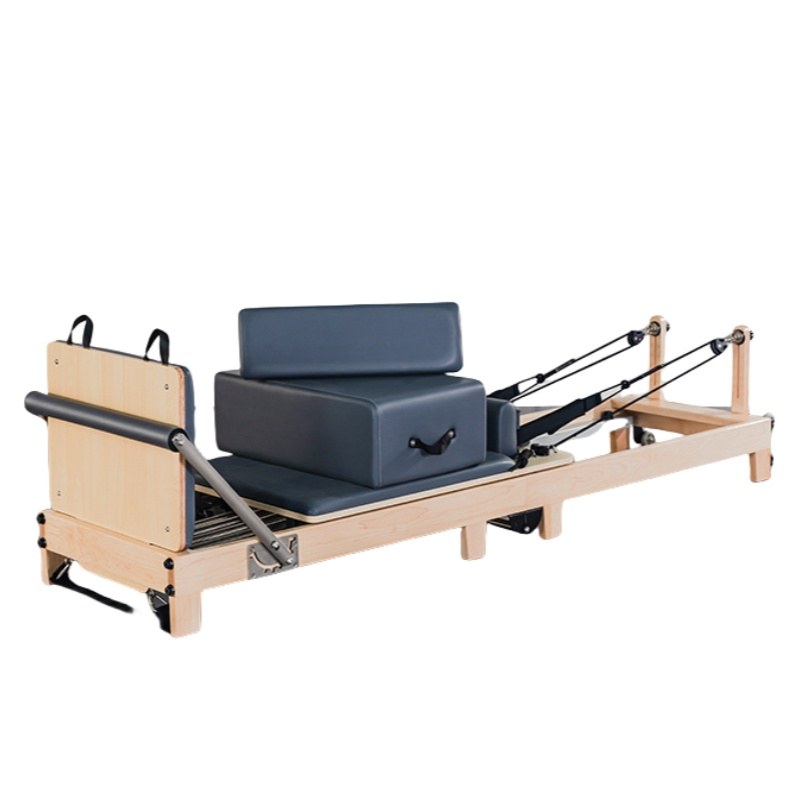
You want to sell Pilates equipment under your own brand, not resell someone else's logo. The fastest path is to take a proven China-made reformer and put your name on it — but "OEM" and "ODM" get thrown around loosely, and the difference decides how much control you actually have over the product. Get it wrong and you end up with a unit you cannot differentiate, or a custom design you cannot afford to repeat.
This guide explains what OEM and ODM really mean for Pilates equipment, what you can realistically customize, the minimum order rules, and the questions that separate a real private-label partner from a trader who just relabels a box.
OEM vs ODM — the practical difference
- OEM (Original Equipment Manufacturing): the factory makes a standard product to your spec, and you apply your brand. You choose the logo, usually the frame and upholstery color, and sometimes component grades. The base product already exists; you are customizing the surface and a few options.
- ODM (Original Design Manufacturing): the factory designs the product and you take it under your brand, often with deeper changes — different dimensions, added features, a unique look. The risk and cost sit more with the factory's design, so the per-unit price is usually a bit higher and the tooling more involved.
For most studio owners and small distributors, OEM is the smarter start: you get a branded product fast, with low risk, and you can test your market before committing to a fully custom design. ODM makes sense once you know exactly what your customers want that the standard catalog does not offer.
What you can actually customize
A serious Pilates manufacturer can usually handle far more than a logo sticker:
- Branding — your logo on the frame, the carriage, and the printed materials (care card, thank-you note, warranty card).
- Color — frame finish (black, white, wood tone, custom RAL) and upholstery color to match your studio identity.
- Spec options — spring set, rope length, footbar type, wheel material, and accessory bundle, chosen from the factory's existing menu.
- Packaging — branded cartons and inner wrapping, which matters the moment a customer unboxes.
- Documentation — your own manual cover, your model names, and your contact details on the inspection and packing list.
What you generally cannot do cheaply is change the core frame geometry or invent a brand-new mechanism — that is a development project, not a private-label order.
Minimum order and how mixing helps
Private labeling does not mean you must buy a container of one model with your logo. The same MOQ logic from a standard order applies: typically 5 pieces per model, with mixed models allowed. That means you could launch your brand with 5 tower reformers, 5 oak beds, and 5 chairs in one shipment — each carrying your logo — without sitting on a warehouse of identical units.
Sample lead time runs about 5–7 days for a branded prototype, a full mixed container about 20–25 days from deposit, and a small branded order 7–15 days. If the factory cannot give you a sample with your logo before mass production, that is a warning sign, not a convenience.
Questions to ask before you commit
- "Is this OEM or ODM, and what is the per-model MOQ with my brand?" Get the number in writing; some factories quote a higher minimum for branding.
- "What exactly can I customize — logo, color, spec, packaging, manual?" The longer the list, the more mature the private-label program.
- "Can I see a branded sample before mass production?" A supplier confident in its process shows you the sample; one that hesitates is hiding something.
- "What are the art-file requirements?" Vector logo (AI/SVG/PDF), Pantone or RAL color codes, and a clear placement diagram prevent a misprinted first batch.
- "Are certifications in my company name or the factory's?" CE, ISO 9001, and SGS usually sit with the manufacturer; confirm what documentation travels with your branded goods for customs and your local market.
Red flags in private-label offers
- No sample with your logo — they want you to commit before you see your own brand on the product.
- Cannot name the customization menu — "we can do anything" with no specifics means they have not actually done it.
- No traceability — if the factory cannot mark your batch, your warranty and reorders become a guessing game.
- Branding dies at the box — a real partner brands the product and the paperwork; a trader just slaps a sticker on a generic unit.
What responsible suppliers do for private label
A manufacturer used to branding other companies' equipment builds it into the line rather than treating it as a favor:
- A clear customization menu — logo, color, spec, packaging, and manual, each with its own option list and lead-time impact.
- A branded sample and a pre-production photo so you approve the look before the run starts.
- Third-party credentials (CE, ISO 9001, SGS) that travel with the goods, plus AQL inspection and factory audits (for example CTI) that prove the branded batch matches the approved sample.
- A free hardware kit (screws and fittings) per order and an installation video for every model, branded to your materials so your customers never see the factory's name.
- Spare parts on hand — springs, ropes, wheels, and belts available to order separately — so your brand keeps studios running instead of stranding them.
For reference, our standard private-label terms are MOQ 5 pieces per model with mixed models allowed, about 20–25 days for a full container or 7–15 days for a small branded order, samples 5–7 days, and each unit ships with a hardware kit and a model-specific installation video.
How to protect your brand
- Approve a branded sample in writing before depositing on production.
- Send clean art files (vector logo + color codes) to avoid a misprinted first batch.
- Keep the pre-production photo as your reference if a later batch drifts.
- Confirm documentation carries your details — manual, packing list, and warranty card.
- Order a spare-parts kit with the first branded run so a single worn part never becomes a complaint about your brand.
Private labeling is not about hiding the factory — it is about building your own relationship with the end customer. The right partner makes your brand look intentional and keeps the quality identical to the approved sample, shipment after shipment.
Talk to us about launching your brand
If you are planning a private-label line, send us your logo, target models, and color preferences. We will return a customization menu, a branded sample plan, and a consolidated quote — so you see your brand on the equipment before you commit a dollar.
Request a private-label quote — tell us the models, quantities, and branding, and we will show you what is possible.
Choosing reformers for a studio or a first container?
Send us your room dimensions, expected weekly usage and destination port. We will tell you which frame and specification actually suits you — and if a cheaper option is the right one, we will say so.
Request a quote