 KETA PILATES
Buying guide
How to Pay a Pilates Equipment Supplier in China Safely
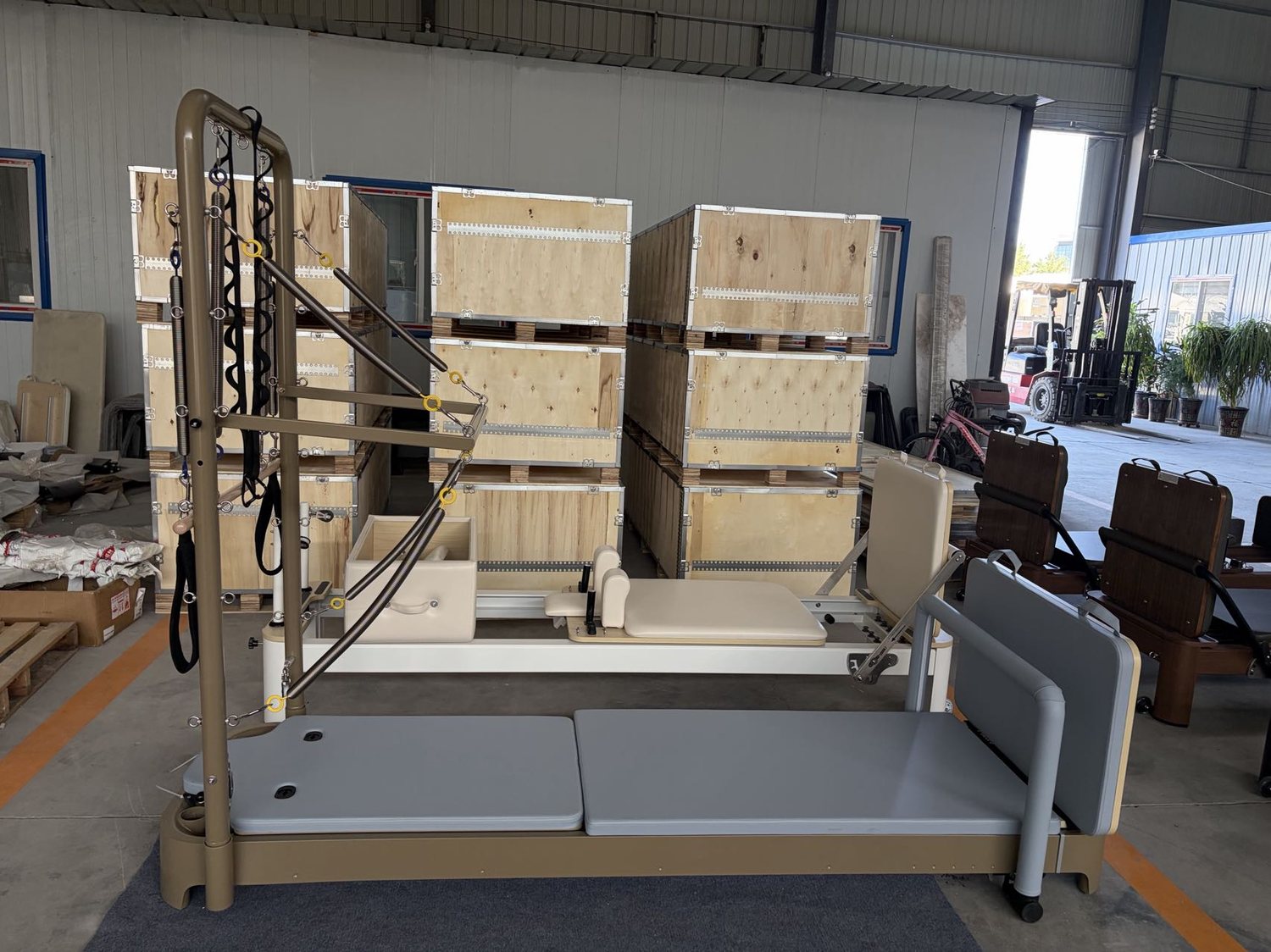
You found a supplier you trust. The quotation looks right, the specs are written down, and the samples passed. Then comes the part that makes first-time importers nervous: how do you actually move the money? Paying a manufacturer in China is not complicated, but the norms are different from buying locally, and a few simple rules keep you safe without slowing the order down.
1. The standard terms: deposit, then balance
For most commercial orders the norm is a 30% deposit to start production and 70% before shipment (or against the bill of lading). That split exists for a reason: the deposit commits both sides and covers the supplier's material outlay, while the balance is paid only once your goods are made and ready to leave.
For small first orders some suppliers ask for more upfront, and for long-established repeat customers the balance can shift later. But 30/70 is the healthy default to expect, and a quote that asks for 100% before anything is built deserves a second look.
2. How the money moves: T/T bank transfer
The normal method is a T/T (telegraphic transfer) wire to the supplier's company bank account — not to an individual's name. You pay the deposit, production runs, and you pay the balance once you have confirmed the goods are finished.
Two practical points:
- Pay to a company account, never a personal one. A legitimate manufacturer invoices from and receives into a registered business account. A "just send it to my personal account" request is a red flag.
- Use a normal bank wire, or a platform like Wise / PayPal for the deposit on very small orders. For container-scale orders a straight T/T is standard and cheapest.
3. What protects you before you pay the balance
The safest buyers do not pay the final 70% blind. Two steps close most of the risk:
- Pre-shipment inspection (AQL). Have a third-party inspector check the goods, or ask the supplier for an AQL report before the balance is due. You pay the balance after the goods are verified, not before.
- A live or recorded factory tour. A short video call on the production floor, or a recorded walkthrough, shows the workshop is real and the order is on the line.
Together these mean your balance is released against evidence, not promises.
4. Documents you should hold
Before the container leaves, make sure you will receive:
- Commercial invoice and packing list — needed for customs and for your own records.
- Bill of Lading (B/L) — proof of the goods and the contract of carriage; the balance is often tied to this.
- Certificate copies — CE, ISO 9001, SGS test reports where applicable, as agreed in the quotation.
- A written specification sheet — the exact model, material, load rating and quantities you ordered.
If a supplier is vague about documents, that is the moment to slow down, not after the wire is sent.
5. Red flags to walk away from
A few patterns mean stop:
- Full payment upfront with no inspection path. Especially on a first order.
- Only informal payment routes — gift cards, crypto, or a personal Western Union. No legitimate manufacturer runs on these.
- No registered company, no invoice, no contract. You should be able to see the business entity and sign something.
- Pressure to pay before you have the spec in writing. Specs first, then money.
None of these means every small supplier is risky. They mean: get the basics in writing, and let the balance follow the evidence.
6. Why a lower MOQ changes the math
A high minimum order can force you into a bigger first payment than you are comfortable with. With a MOQ of 5 pieces and the ability to mix models in one container, a first order can stay small and test the relationship before you commit serious capital. That smaller deposit is itself a form of protection — you are not betting the whole container on an unproven partner.
7. A simple safe-payment checklist
Before you release the balance, tick these:
- supplier paid to a company account;
- 30% deposit / 70% balance terms in writing;
- AQL or your own inspection passed;
- factory tour or video seen;
- invoice, packing list, B/L and certificates lined up;
- specification sheet matches what you ordered.
If all six are yes, the payment is routine. If two or three are no, that is your signal to pause.
The bottom line
Paying a China supplier safely is mostly about sequence: deposit to start, evidence before balance, documents in hand. The risk is not the country — it is paying before you have proof. Build the inspection and the paper trail into the order from the quotation stage, and the wire becomes the easy part.
We manufacture commercial Pilates reformers, towers, Cadillacs, chairs, barrels and spine correctors in aluminium, oak, maple and beech, with CE / ISO 9001 and SGS-tested where applicable, AQL pre-shipment inspection, CTI-audited production and a live video factory tour. Terms are a 30% deposit with the balance against inspection and shipping documents, MOQ is 5 pieces, and you can mix models in one container. Tell us your target market and quantities and we will confirm a written specification before production starts.
Choosing reformers for a studio or a first container?
Send us your room dimensions, expected weekly usage and destination port. We will tell you which frame and specification actually suits you — and if a cheaper option is the right one, we will say so.
Request a quote