 KETA PILATES
Buying guide
How to Mix Reformer Models in One Container Order
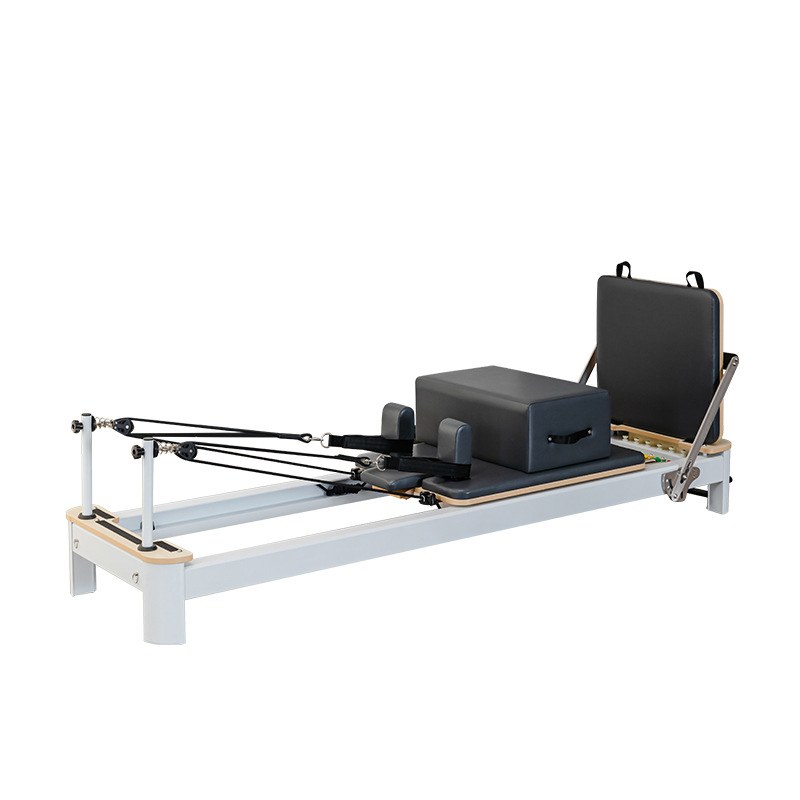
You want one tower reformer for the rehab corner, a few oak studio beds for the main room, and two chairs for private sessions — but your quantities are small and a full container of a single model would leave you overstocked. The good news: you do not have to order one model per shipment. Mixing models in a single container is normal practice, and done right it lowers your per-unit freight and lets you open a complete studio from one delivery.
This guide explains how mixed-model loading works, the minimum order rules suppliers use, how to plan a container that actually fits, and the questions to ask so you are not surprised by the invoice.
Can you really mix models in one shipment?
Yes — for most Pilates equipment exporters, mixed loading is standard, not a special request. A supplier who builds reformers, chairs, barrels, and cadillacs on the same production line can load them into one 40ft high-cube container alongside each other. The only real constraint is the minimum order quantity (MOQ) per model, not a rule that says "one model per container."
Typical MOQ for a China manufacturer is small — often 5 pieces per model, with mixed models allowed. That means you could take 5 tower reformers, 5 oak beds, 5 chairs, and 5 barrels in the same shipment and still meet the factory's minimum, as long as each model hits its own 5-piece floor.
What you cannot do is order 1 piece of twenty different models and expect production to fire up for you. The MOQ exists because the line has setup, material cutting, and QC costs that do not shrink just because the quantity does.
How many pieces actually fit
Container capacity is driven by physical size and weight, not by model count. A few reference points that match common production data:
- A 20ft container holds roughly 30 core reformers (the longest single item drives the count).
- A 40ft high-cube container holds roughly 75 core reformers when loaded with one model.
- A single reformer's gross weight is around 110 kg, so weight is rarely the limiting factor — length and stacking height are.
Mixing changes the math in your favor. Chairs, barrels, and spine correctors are short and nest or stack, so they fill the "dead space" around long reformers instead of competing for floor length. A well-planned mixed container often carries more total units than a single-model load, because the short items occupy volume a uniform load would waste.
Plan the mix before you ask for a quote
Do not start with "send me a price for a container." Start with your studio plan, then map it to models:
1. List the rooms and their purpose — group, private, rehab, warm-up — and assign a model to each. 2. Decide the count per model using your MOQ as the floor (e.g., 5 towers, 10 oak beds, 5 chairs, 3 barrels). 3. Add the dimensions and gross weights to a simple spreadsheet so you can sanity-check against container limits. 4. Leave buffer — aim for about 85–90% of estimated capacity so the factory has room to pack safely and you are not gambling on a perfect Tetris fit.
Hand that list to the supplier and ask for a loading plan, not just a price. A serious exporter will tell you what fits, what does not, and where the wasted space is — that conversation alone tells you how experienced they are.
Questions to ask before you commit
- "What is the MOQ per model, and can models be mixed?" Get the number in writing; some factories quote a total MOQ but quietly require a higher per-model minimum.
- "Can you send a container loading plan with dimensions?" If they cannot visualize the pack, they may not pack it well.
- "How is freight calculated — per container or per cubic meter?" Mixed loads are almost always quoted per container (FCL), which is why consolidation saves you money versus multiple small shipments.
- "What about samples first?" A sample of one model typically runs 5–7 days; a full mixed container runs about 20–25 days from deposit, with small mixed orders (7–15 days) in between. Knowing the clock helps you time a studio opening.
- "Are spare parts and manuals included?" A responsible supplier includes a free hardware kit (screws and fittings) per order and an installation video for every model — critical when you are assembling four different units, not one.
Why mixing is cheaper than it looks
Two forces work in your favor. First, ocean freight is charged per container, so one mixed FCL costs about the same as one single-model FCL — but carries a complete product range. Second, you avoid repeated small-parcel or LCL shipments, each of which adds handling, customs entries, and risk of damage. For a studio owner, the mixed container is usually the first point where equipment sourcing stops being a series of emergencies and becomes a single planned delivery.
What responsible suppliers do on mixed orders
A manufacturer used to mixed loading builds it into the process rather than treating it as a favor:
- Production scheduling that batches your models so all items are ready to load together, not shipped in drips.
- Model-specific packing — each unit crated or wrapped to its shape, with the short items stacked to fill gaps.
- A loading photo or video at the factory before sealing, so you see the mix and the fill level before it leaves.
- One coherent document set — commercial invoice, packing list, and inspection report that list every model and quantity, which also smooths customs clearance.
For reference, our standard terms are MOQ 5 pieces per model with mixed models allowed, about 20–25 days for a full container or 7–15 days for a small mixed order, samples 5–7 days, and each unit ships with a hardware kit and an installation video for its specific model.
How to protect yourself on a mixed order
- Confirm the per-model MOQ and the total fit in writing before depositing.
- Get the loading plan and a packed-weight estimate, not just a piece count.
- Ask for the pre-seal photo/video so the mix matches your order.
- Keep the packing list matching the invoice exactly — customs cares about that alignment.
- Order a small spare-parts kit (springs, ropes, wheels, belts) with the container so one worn part never idles a reformer.
Mixing models in one container is not a compromise — done with the right partner, it is the most efficient way to open a complete studio. The supplier who plans the load with you, documents it, and proves it before sealing is the one worth the deposit.
Talk to us about a mixed container
If you are planning a studio, send us your room list and target counts. We will return a loading plan, per-model MOQ, and a consolidated quote — so you see the whole container before you commit a dollar.
Request a mixed-container quote — tell us the models and quantities, and we will show you what fits.
Choosing reformers for a studio or a first container?
Send us your room dimensions, expected weekly usage and destination port. We will tell you which frame and specification actually suits you — and if a cheaper option is the right one, we will say so.
Request a quote