 KETA PILATES
Buying guide
How Many Reformers Does a Studio Actually Need
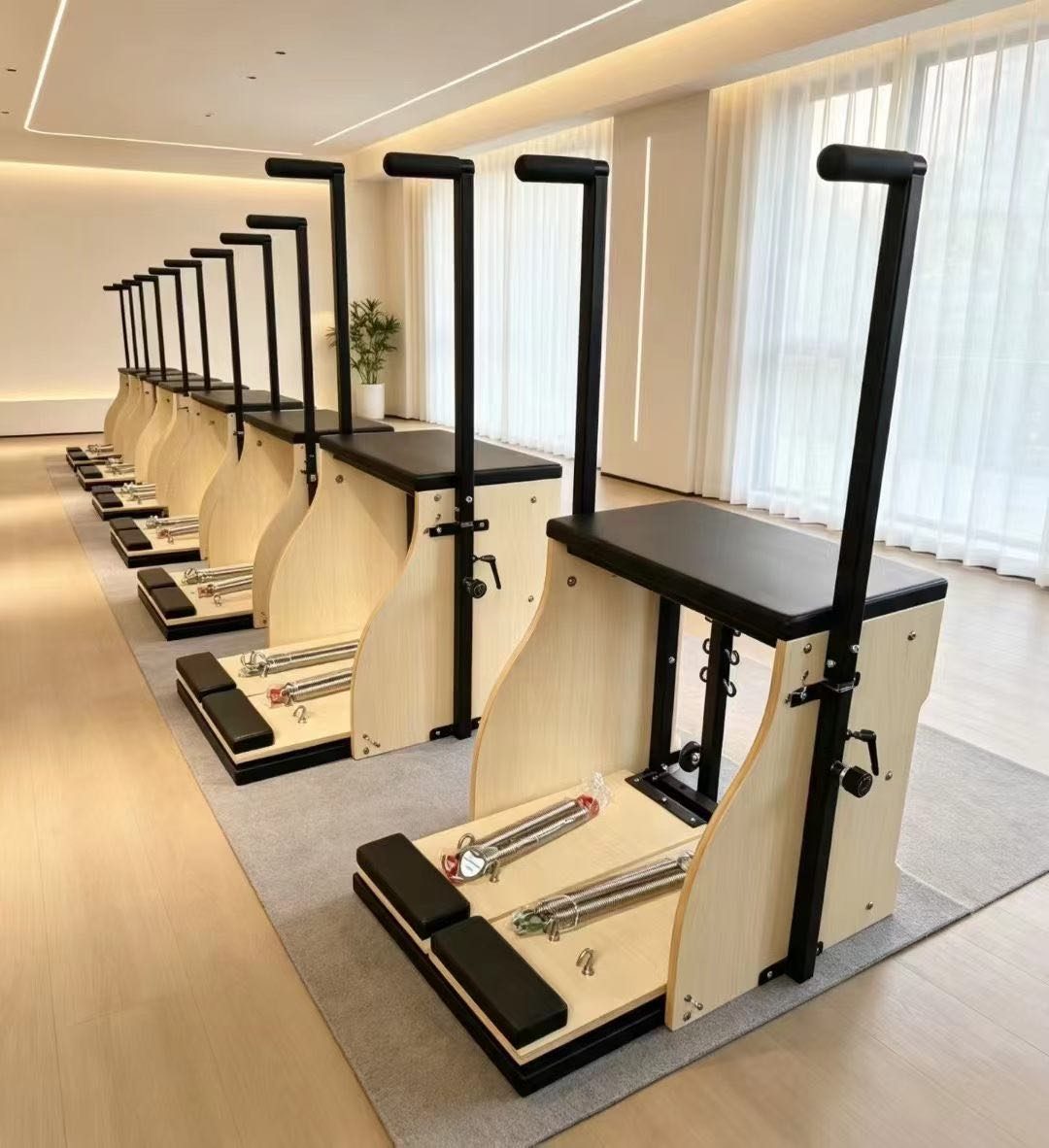
Buying too few reformers caps your class revenue from day one. Buying too many ties up cash in equipment that sits idle during quiet hours. This is the calculation we walk studio owners through before every first order.
Start with class format, not room size
The number of machines you need depends almost entirely on how you teach:
- Group reformer classes — one reformer per participant, no exceptions. A class of 10 needs 10 machines.
- Private and semi-private sessions — one reformer per client plus one for the instructor to demonstrate. Two to four machines cover most private studios.
- Mixed studios — decide the maximum group size you will ever run, then add two machines for private work.
The common mistake is planning for today's class size. If you intend to grow from 8 to 12 participants within a year, buying 8 machines means re-ordering, paying freight again, and possibly finding your original finish is no longer available.
Match machines to room dimensions
A standard reformer needs roughly 2,340–2,560 mm in length and 600–900 mm in width. Working space matters more than the machine itself:
- 600 mm clear in front of and behind each reformer
- 900–1,000 mm between machines side by side
- 2,000 mm ceiling minimum for tower reformers; 2,400 mm for Cadillac reformers
A practical rule of thumb: each reformer needs about 4–5 square metres of floor including its share of the aisles. A 60 m² studio comfortably fits 12 machines; a 30 m² room fits 6.
Typical configurations we ship
| Studio type | Reformers | Notes |
|---|---|---|
| Home or private studio | 1–2 | Usually one reformer plus a chair or barrel |
| Small studio (1–2 instructors) | 6–8 | Enough for one full group class |
| Mid-size studio (3–4 instructors) | 10–14 | Two classes running in parallel |
| Large studio or franchise site | 15–20+ | Dedicated group room plus private room |
Always budget for spares and downtime
Two things studios underestimate:
1. One machine will be out of service. Springs wear, ropes stretch, wheels need replacing. Plan at least one spare machine per 10 in use, or you will cancel classes the first time something breaks.
2. Spare parts are cheaper in the first shipment. Springs are the most replaced part under daily commercial use, with a typical replacement cycle of 12–18 months. Ordering 10–20% spare springs with your machines costs a fraction of shipping them later.
Tower and Cadillac: how many of those
You do not need a tower reformer for every station. A common and workable ratio:
- 1 tower reformer per 6–8 standard reformers
- 1 Cadillac reformer per studio (often in the private room, not the group room)
Towers and Cadillacs are used for a smaller share of exercises and cost more per unit, so over-buying them is the most common budget mistake in new studio fit-outs.
Three mistakes that cost real money
Buying too many tower and Cadillac machines. They are impressive, and they cost noticeably more per unit. In most studios they are used for a minority of exercises. One tower per six to eight standard reformers, and one Cadillac per studio, is a ratio that works.
Forgetting the ceiling. A standard reformer needs no special height, but a tower reformer needs about 2,000 mm and a Cadillac reformer around 2,400 mm. Studios in older buildings or converted retail units often find this out after delivery.
No spare machine. Springs and ropes are consumables, and something will eventually need a part. Without one spare machine per ten in service, you cancel classes the first time anything breaks — and a cancelled class is lost revenue you cannot recover later.
A sensible first order
If you are opening your first studio and unsure, this sequence works:
1. Six standard reformers — enough for a full group class, leaves room to grow 2. One tower reformer — adds exercise variety without doubling cost 3. Spare springs and straps — 10–20% of machine count 4. One barrel or chair — small footprint, high perceived value for clients
Then add machines once you see which class times fill up first. Freight is the only real penalty for ordering in two batches, and it is usually smaller than the cost of guessing wrong.
We build reformers, tower reformers and Cadillac reformers in aluminium, oak, maple and beech, with foldable models for studios where floor space is tight. MOQ is 5 pieces and models can be mixed in one container.
Send us your room dimensions and class plan, and we will tell you honestly how many machines make sense — including if the answer is fewer than you were planning to buy.
Choosing reformers for a studio or a first container?
Send us your room dimensions, expected weekly usage and destination port. We will tell you which frame and specification actually suits you — and if a cheaper option is the right one, we will say so.
Request a quote