 KETA PILATES
Buying guide
Equipment Checklist for Opening a Pilates Studio
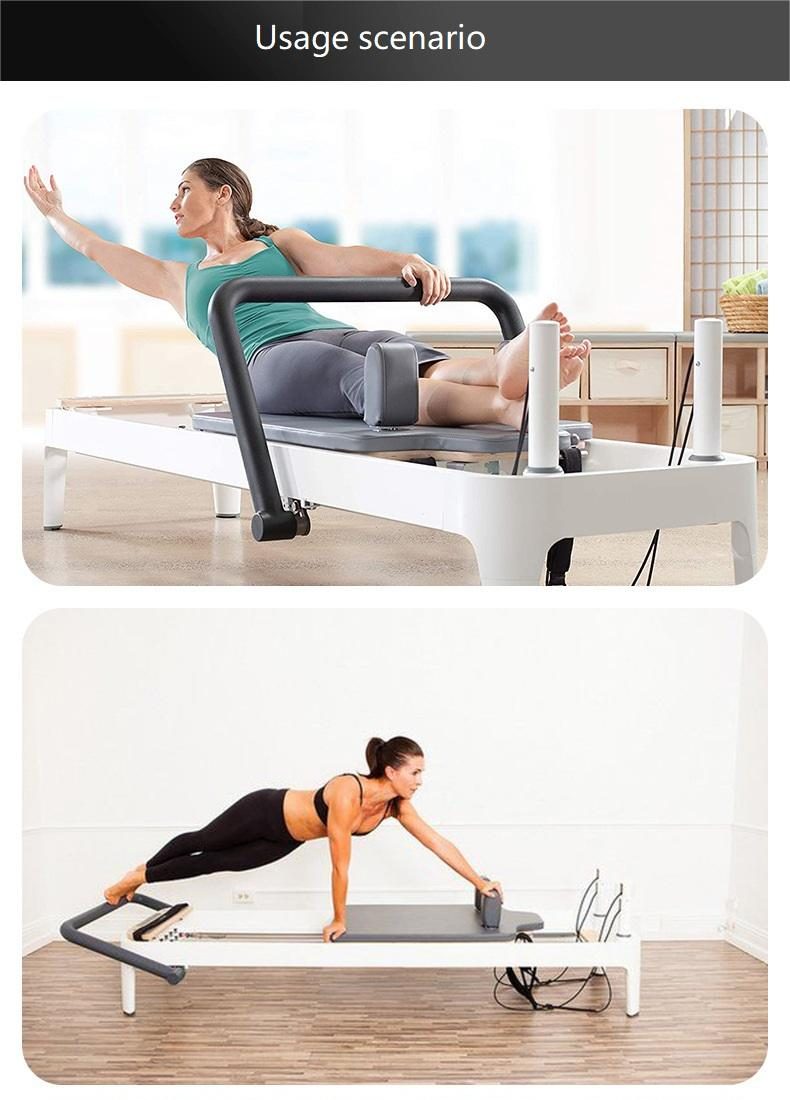
Opening a studio is mostly a list-making exercise. The rent, the branding and the insurance are all straightforward. The equipment is where money quietly goes wrong — buyers either over-order the impressive machines and under-order the boring ones, or buy in the wrong sequence and end up with a room that cannot run a full class.
This is the checklist we walk new studio owners through before a first order, in the order that matters.
1. Start with what you will actually teach
Do not start with a catalogue. Start with a timetable.
- Group reformer classes — one reformer per participant, no exceptions. Decide the largest class you will ever run.
- Private and semi-private sessions — one machine per client, plus one for the instructor to demonstrate.
- Mat classes — much cheaper per client, but they do not need reformer space.
- Rehab or clinical work — smaller groups, more accessories, more floor space per client.
Write down your intended weekly timetable before you buy anything. It determines the machine count more accurately than the room size does.
2. The core equipment list
| Item | Typical quantity | Why |
|---|---|---|
| Reformers | 6–12 | The revenue engine. One per group participant. |
| Tower reformer | 1 per 6–8 reformers | Adds exercise variety without doubling cost |
| Cadillac reformer | 1 per studio | Private room, assessment, rehab work |
| Pilates chair | 1–2 | Small footprint, useful for privates |
| Ladder barrel | 1 | Classic repertoire, small floor space |
| Spine corrector | 1–2 | Cheap, high perceived value, easy to store |
| Wall unit / hanging unit | 1–2 | Uses vertical space where floor space is tight |
A practical first order for a new studio: six reformers, one tower reformer, one Cadillac reformer, one barrel, one or two chairs. That covers a full group class and most private work, and it leaves room to grow.
3. What new studios forget
Three things appear on almost every "I wish we had bought this earlier" list.
Spare springs. Springs are the fastest-wearing component — under daily commercial use they are typically replaced every 12–18 months. Order 10–20% spare sets with your machines. Shipping them separately later costs more than the springs themselves, and you cannot run a class on a machine that is out of resistance.
A spare machine. One reformer per ten in service is a sensible buffer. Without it, the first broken spring means a cancelled class, and a cancelled class is revenue you never get back.
Storage and staging space. Mats, boxes, small props, cleaning supplies and client belongings all need somewhere to live. Studios regularly under-plan this and end up with equipment in the walkway.
4. How to split the budget
A workable allocation for a first fit-out:
- 60–70% — reformers (the machines clients actually pay to use)
- 15–20% — specialty pieces (tower, Cadillac, barrel)
- 5–10% — spares, springs, straps, small props
- 5–10% — freight, duty and installation
If your budget is tight, buy more reformers and fewer specialty pieces. A room with eight reformers and no Cadillac runs more classes than a room with four reformers and two Cadillacs.
5. Buy in the right sequence
1. Reformers first — they generate the revenue 2. Tower reformer second — best value upgrade per dollar 3. Barrel and chair — high client value, low cost 4. Cadillac last — usually a private-room or assessment tool, not a group-class machine
Buying in this order means that if your budget runs out earlier than planned, you are already operational rather than half-equipped.
6. Plan the space properly
Each reformer needs roughly 4–5 square metres of floor including its share of the aisles. Practical clearances:
- 600 mm in front of and behind each reformer
- 900–1,000 mm between machines side by side
- 2,000 mm ceiling minimum for tower reformers; 2,400 mm for Cadillac reformers
A 60 m² room comfortably fits twelve machines. A 30 m² room fits six. Measure before you order, not after.
7. What to confirm with your supplier
Before you place the order, get these in writing:
- MOQ and whether models can be mixed (ours is 5 pieces, mixed models accepted)
- Container loading plan — as a reference, a 20ft container takes about 30 reformers and a 40ft high cube about 75; each unit ships at roughly 110 kg gross weight
- Lead time, and what happens if it slips (samples 5–7 days, containers about 20–25 days)
- Warranty structure — frame versus wear parts
- Spare parts availability for at least five years
- Assembly support — installation videos are available for every model; selected models also include an English printed manual
- Certification for your market — CE, ISO 9001 and SGS test reports are standard, with additional documents prepared on request
The short version
Six reformers, one tower reformer, one Cadillac reformer, a barrel and a chair will open most studios. Add spare springs and one buffer machine. Buy reformers before specialty pieces. Measure the room before you order, and confirm the loading plan before production starts.
We build reformers, tower reformers and Cadillac reformers in aluminium, oak, maple and beech, plus foldable models, ladder barrels, chairs and studio equipment. Tell us your room dimensions and class plan, and we will tell you honestly how many machines make sense — including if the answer is fewer than you expected.
Choosing reformers for a studio or a first container?
Send us your room dimensions, expected weekly usage and destination port. We will tell you which frame and specification actually suits you — and if a cheaper option is the right one, we will say so.
Request a quote