 KETA PILATES
Buying guide
5 Mistakes First-Time Pilates Equipment Buyers Make
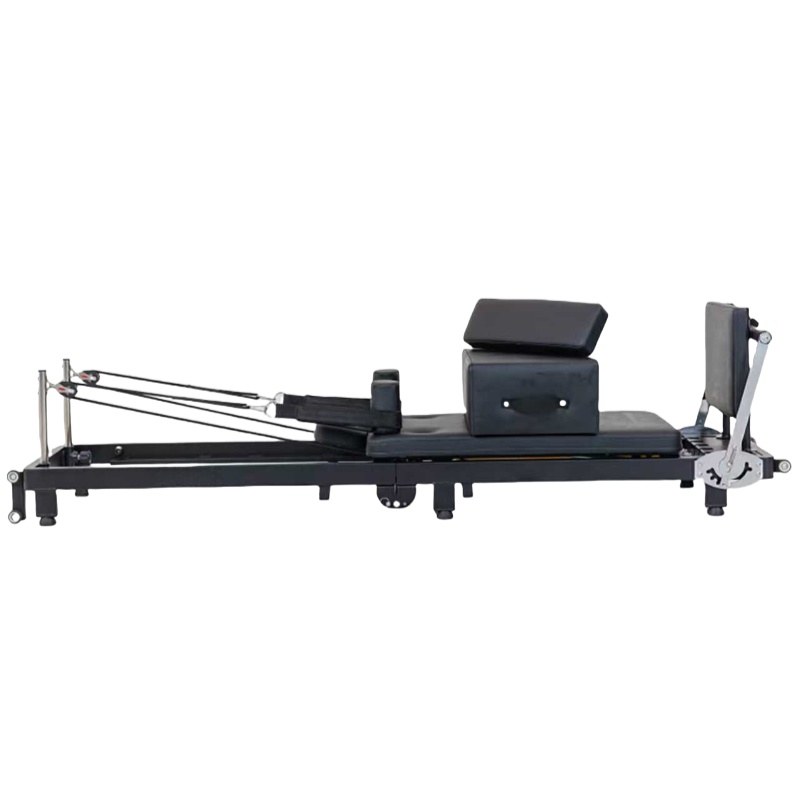
Buying your first batch of Pilates equipment from a factory overseas looks simple on paper: pick a model, get a quote, pay a deposit, wait for the container. In practice, most first-time buyers lose time, money, or both on the same five mistakes. The good news is every one of them is avoidable with a single check before you pay.
The short version: the five mistakes are (1) forgetting to measure the room before ordering, (2) stuffing the first container with too many untested models, (3) assuming every "included" accessory actually ships in the box, (4) skipping a pre-shipment inspection, and (5) choosing the cheapest quote without checking who is behind it. Below is what each one costs you and the one question that prevents it.
1. Forgetting to Measure the Room First
A reformer is longer than most buyers expect. Depending on the frame material, a single unit runs from about 2,110 mm for aluminium up to 2,410 mm for solid oak, and that is the bed alone, before you account for the space a user needs to extend and move. Add clearance on both ends and you are often looking at roughly 2.8–3.2 m of floor length per station.
The mistake is ordering for the number of clients you want, not the square metres you have. A studio that fits six yoga mats does not fit six reformers. Before you quote, sketch the room with real measurements and subtract at least 60 cm of working clearance per unit.
If space is tight, a foldable model such as the FR101 or FR401 cuts the footprint roughly in half when stored and stands upright against a wall between classes. Matching the model to the room is cheaper than renting a bigger space after the container lands.
2. Filling the First Container With Too Many New Models
The temptation on a first order is to impress your market with variety: fifteen models, every colour, a 40-foot high cube near its 75-unit limit. The risk is that one weak model becomes dozens of units of dead stock you cannot move.
A smarter first container holds three to five proven models you can actually sell, mixed under our 5-piece minimum per model so the assortment still feels complete. You learn which frame your customers prefer, then double down on the winners in container two. A 20-foot container fits around 30 core units if you keep the mix tight; a 40-foot high cube roughly 75.
The check: can you name the customer for each model before it ships? If not, cut it from the first order.
3. Assuming "Spare Parts Included" Means Everything
Suppliers use the phrase "spare parts included" loosely. On our side the policy is specific: every order ships with one free hardware set — the screws and small fittings needed for assembly. Wear parts such as springs, ropes, wheels, and straps are consumables and are ordered separately, because how fast they wear depends entirely on your usage.
Another quiet gap is documentation. Most models ship without a paper manual; a few include an English version. What every model does have is an installation video, sent the moment you confirm the model number.
The check: before paying, ask for the exact list of what is in the carton and what is not. A supplier who answers precisely is one you can trust with the reorder.
4. Skipping the Pre-Shipment Inspection
Once the goods are on the water, a defect becomes very expensive: you either ship them back at your cost or discount them to clear. The fix is dull but reliable — inspect before loading.
A pre-shipment inspection, or even your own written checklist sent to the factory, catches the things that ruin a first impression: scratched rails, the wrong upholstery colour, missing fittings, loose carriage. It takes a day and costs far less than an ocean of returns.
If you are new to this, start with a short, plain checklist: model count, colour, surface finish, hardware set present, carton label matches the PO. Photograph the loaded container with the seal number visible. That single step resolves most disputes before they start.
5. Choosing the Cheapest Quote Without Checking the Supplier
The lowest quote usually hides something — a thinner frame, cheaper springs, or a trading company marking up a factory they have never visited. Price matters, but on a first order the bigger risk is a partner you cannot verify.
Three checks cost nothing: ask whether you are dealing with a factory or a trading company, request a third-party audit summary (we hold a CTI-audited report), and ask for an installation video of the exact model you plan to buy. A real manufacturer answers all three without hesitation; a middleman stalls on at least one.
The check: would you trust this supplier with a reorder six months from now? If the answer is not an immediate yes, the saving was not worth it.
Before You Order, Run This List
- Room measured, with clearance, model matched to space
- First container limited to 3–5 proven models, MOQ 5 per model
- Written list of what is included vs. bought separately
- Pre-shipment check or inspection booked before loading
- Supplier verified as factory, with audit and install video
Miss any one and the container still arrives — but the difference between a smooth first order and an expensive lesson is almost always these five points. If you want a shortlist matched to your room size and budget, tell us your studio dimensions and target price band and we will narrow it to three models worth testing first.
Choosing reformers for a studio or a first container?
Send us your room dimensions, expected weekly usage and destination port. We will tell you which frame and specification actually suits you — and if a cheaper option is the right one, we will say so.
Request a quote