 KETA PILATES
Buying guide
Cheap vs Commercial Grade Reformers: The Differences That Matter
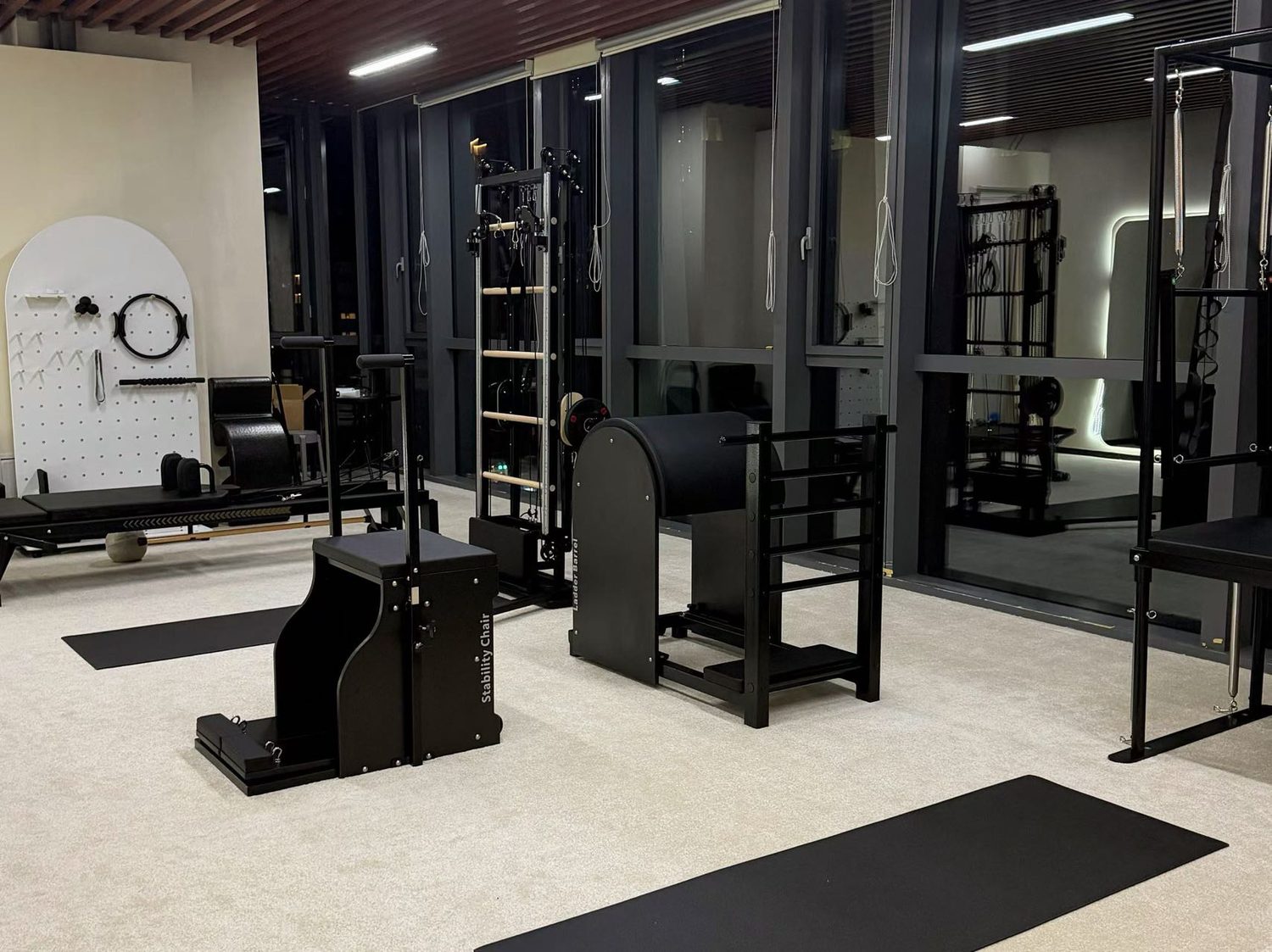
"Commercial grade" is printed on a lot of reformers that are not. If you are equipping a studio, a hotel or a resale business, the difference is not cosmetic — it shows up in maintenance bills, cancelled classes and, eventually, in whether clients come back.
Here is where the money actually goes.
Load rating: the first thing to ask for
A genuine commercial reformer is rated for 120–150 kg in motion — meaning under dynamic load, not someone standing still on it.
Light-use machines are often rated well below this and simply not tested for it. The frame will not fail dramatically; instead, you get gradual play in the carriage, wheels that wear oval, and a machine that feels loose within a year.
The rating should be a clear figure, not a vague claim. A machine built for commercial use will always have a number attached to it.
Frame construction
| Light use | Commercial | |
|---|---|---|
| Wood joints | Screwed butt joints, glued dowels | Mortise and tenon, reinforced |
| Metal frame | Thin-wall extrusion | Heavier wall, welded and braced |
| Finish | Thin lacquer | Hard-wearing multi-coat finish |
Wooden commercial frames use mortise-and-tenon joinery because screwed joints work loose under tens of thousands of cycles. This is not visible in photographs — it is visible after eighteen months.
The cycle test nobody mentions
A reformer in a busy studio runs roughly 150,000 carriage cycles a year (six hours a day, six days a week).
Commercial machines are specified with bearings, wheels and tracks chosen against that number. Light-use machines are specified against "occasional home use", which might be a tenth of it.
None of this is visible in a showroom, which is exactly why it is worth understanding before you buy rather than after.
Springs: the tell
Springs are the fastest-wearing component and the easiest place to cut cost.
- Commercial sets use consistent wire and consistent resistance across all springs
- Replacement cycle under daily use is 12–18 months
- Cheap sets vary by 10–15% between springs, which instructors feel immediately
A class where two machines have different resistance is a safety and instruction problem, not just a comfort one.
Upholstery and foam density
Foam density is specified in kg/m³. Commercial upholstery typically sits above 30 kg/m³; anything below that flattens under daily use.
The shortcut is invisible on day one. It shows up as a sagging carriage bed, worn edges, and clients who notice the studio "feels tired".
Warranty: read the structure, not the headline
A fair commercial warranty looks like this:
- Three years on the frame
- One year on other parts
- Spare parts stocked for at least five years
Be careful with lifetime warranties that exclude "wear parts" — because springs, ropes, wheels and straps are exactly the things that wear.
When a cheaper machine is the right choice
Not every situation needs a commercial machine. Lower-specification units make sense when:
- Home use — one or two sessions a week
- Low-frequency environments — a hotel gym with occasional use
- Short-term or pop-up setups where the machine will not see years of service
The mistake is not buying cheap — it is buying cheap for a setting that runs classes every day.
The real cost calculation
A commercial machine that costs 40% more and lasts three times as long is cheaper per year. Add the costs that never appear on an invoice:
- Cancelled classes while a machine is out of service
- Instructor time spent on adjustments
- Client impressions of a room with sagging beds
- Freight on replacement machines or parts
One machine out of service in a studio of ten costs you about 10% of your class capacity. That is usually more expensive than the upgrade was.
How to check before you buy
- ☐Load rating suitable for daily commercial use
- ☐Frame joint method or wall thickness known
- ☐Carriage and bearing quality understood, not assumed
- ☐Spring consistency checked, spares ordered
- ☐Upholstery foam density appropriate for daily use
- ☐Warranty structure read in full
- ☐Spare parts availability confirmed for five years
We build reformers, tower reformers and Cadillac reformers in aluminium, oak, maple and beech, with a three-year frame warranty and one year on other parts. Every order includes spare screws and fittings, and installation videos are available for every model.
Tell us how many hours a day your machines will run, and we will tell you which specification actually fits — including when a lighter model is the honest answer.
Choosing reformers for a studio or a first container?
Send us your room dimensions, expected weekly usage and destination port. We will tell you which frame and specification actually suits you — and if a cheaper option is the right one, we will say so.
Request a quote