 KETA PILATES
Buying guide
Beech vs Maple vs Oak: Which Wood for a Pilates Reformer
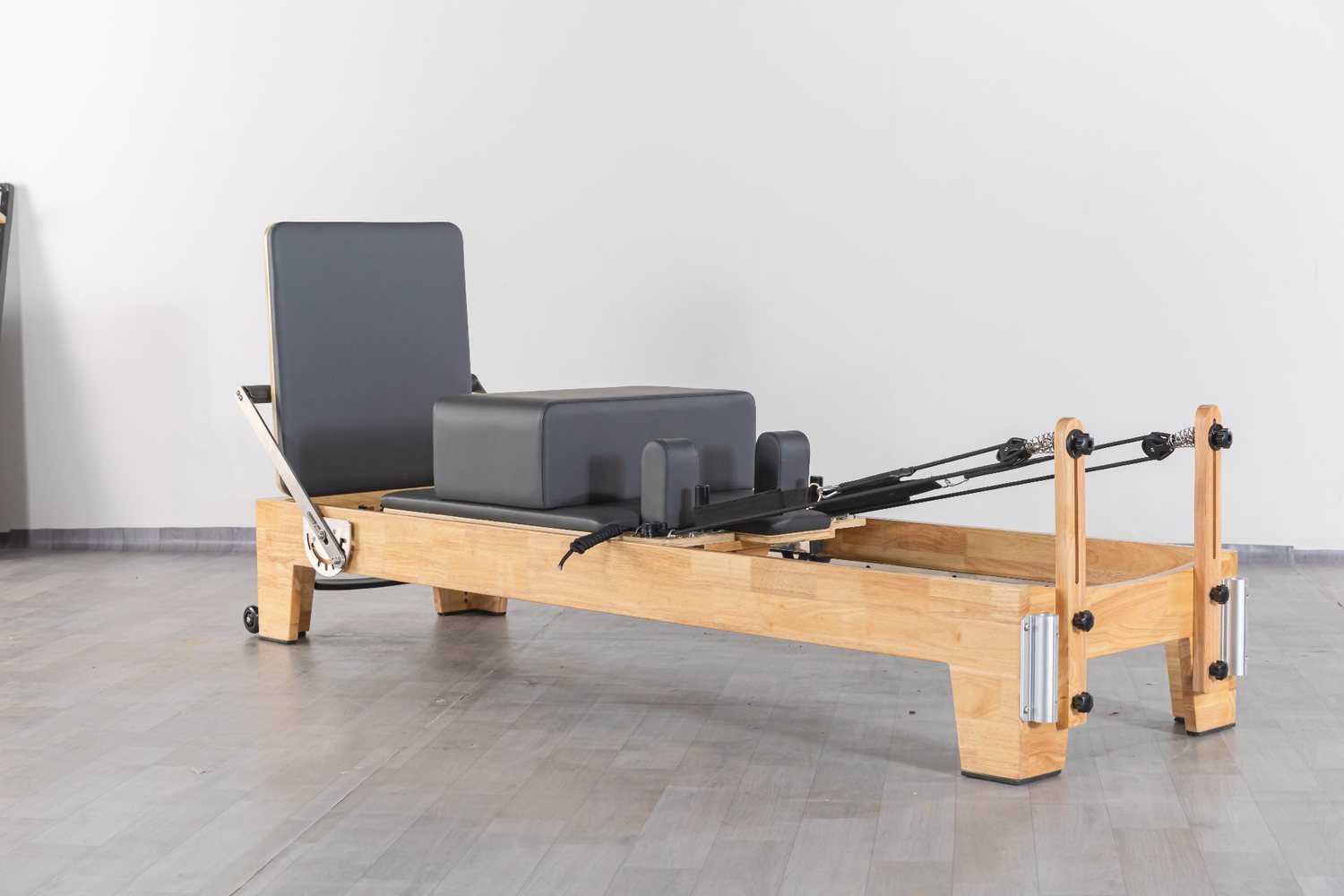
Wood changes how a reformer looks, how it feels, how much it weighs and how well it survives a humid climate. If you are buying for resale, the choice also changes who wants to buy it from you.
Here is how beech, maple and oak compare — and when aluminium is the better answer altogether.
The three woods at a glance
| Maple | Oak | Beech | |
|---|---|---|---|
| Look | Light, clean, classical | Warmer, visible grain, traditional | Pale, even, understated |
| Stability | Very stable | Stable, heavier | Dense and rigid |
| Weight | Medium | Heavier | Medium-heavy |
| Typical use | Classical studios, premium positioning | Traditional studio look | Where frame stiffness matters |
| Our length range | 2,310–2,380 mm | 2,280–2,410 mm | 2,300 mm |
Maple: the classical standard
Maple is what most classical studios expect to see. It is stable, takes a hard finish, and holds its colour rather than yellowing unevenly. It also machines cleanly, which is why joints on maple frames tend to be precise.
Choose maple if your buyers sell classical Pilates, or if they want a premium-looking room with a light, calm palette. Maple models in our range run 2,310–2,380 mm in length.
Oak: traditional appearance, more weight
Oak has a stronger grain and a warmer tone. It reads as "established studio" rather than "modern studio", which suits some markets very well.
The trade-off is weight. An oak reformer is heavier to move and more expensive to ship per unit. If your customer's room layout changes often, or if freight cost per machine matters, that extra weight shows up twice — once in handling, once in shipping.
Our oak models run 2,280–2,410 mm.
Beech: rigid and understated
Beech is dense and stiff. It is chosen where frame rigidity matters more than appearance — heavier users, higher-intensity programmes, or buyers who simply like the clean, pale look.
It is less common than maple or oak in traditional studios, which makes it a quiet differentiator if your customers want something their competitors do not stock. Our beech model is 2,300 mm.
When aluminium beats all three
For some markets, wood is simply the wrong answer. Consider aluminium when:
- The climate is humid or coastal — Southeast Asia, the Gulf, coastal Australia. Aluminium removes most warping and corrosion complaints.
- The equipment gets moved often — hotel gyms, multi-purpose rooms, mobile instructors.
- Shipping cost per unit matters — aluminium is the lightest option.
- The buyer wants a modern, uniform look across many rooms.
Our aluminium reformers run 2,110–2,560 mm, the widest range of the four materials, which makes it easier to match a specific room size.
Finish and day-to-day care
Whichever wood you choose, the finish is what clients touch:
- Hard-wearing multi-coat finish resists sweat and cleaning products far better than a thin lacquer
- Frame joints matter more than the species — mortise-and-tenon construction outlasts screwed assemblies under repeated load
- Wipe down daily. Sweat and humidity are what shorten a wooden frame's life, not the exercises themselves
- Keep the room climate stable. Wood needs a reasonably constant indoor environment; a studio above a pool or in a damp basement will test any finish
Which wood sells where
If you are buying for resale rather than for your own studio, the pattern looks something like this:
- Classical and instructor-led markets (much of Western Europe, Australia, North America) — maple is the expected answer, and buyers will ask for it by name.
- Traditional or heritage-style studios — oak's grain and warmth sell the room as much as the equipment.
- Buyers who want a point of difference — beech is less common on competitors' floors, which makes it easy to talk about.
- Humid, coastal and island markets — wood competes badly with aluminium. Lead with aluminium there and treat wood as the exception.
For a first container, a mixed specification is usually the safer call. Models can be mixed in one order, so you can cover the classical buyer and the humid-climate buyer without committing to one story.
How to decide for your market
Ask three questions:
1. What do your customers' customers expect? Classical training expects wood. Modern fitness expects aluminium. 2. What is the climate? Humid markets reward aluminium or stainless springs. 3. How often will it move? Frequent moving rewards lighter frames.
If you are stocking for resale and unsure, a mixed first container is the sensible answer — maple and aluminium together cover most of what buyers ask for, and different models can be mixed in one container.
We build reformers, tower reformers and Cadillac reformers in aluminium, oak, maple and beech. MOQ is 5 pieces and models can be mixed in one container. Tell us your market and climate, and we will tell you which frame sells best there — including when wood is not the right answer.
Choosing reformers for a studio or a first container?
Send us your room dimensions, expected weekly usage and destination port. We will tell you which frame and specification actually suits you — and if a cheaper option is the right one, we will say so.
Request a quote